Multi-Cultural Community Alliance (MCCA) - Building Cultural
Vision
A Minnesota where immigrant, refugee, and communities of color thrive not by leaving their cultures behind, but by drawing strength from them. Where Bicultural Healthy Living is the standard, not the exception. Where systemic change is built by and with communities, not delivered to them.

Who We Are: Five Partners, One Coalition
MCCA is a coalition of five anchor community-based organizations each deeply rooted in the communities they serve, each bringing distinct cultural expertise, trusted relationships, and broad geographic reach supported by a wide network of cultural and ethnic community-based agencies across the Twin Cities. Together, the five anchor partners and their extended network span African American, Asian American, Hispanic/Latinx, Pan African, and American Indian communities, creating a coalition that is uniquely positioned to reach, serve, and authentically represent the full diversity of the Twin Cities metropolitan area.

Asian Media Access (AMA)
Co-Lead Agency – Asian American and Pacific Islander Communities.
Outreach, multimedia, IT training, fiscal management, case management, senior health programming, and Bicultural Healthy Living curriculum development. Serving Asian American communities across more than 40 ethnicities since 1993.
Frogtown Rondo Black Church Alliance (FRBCA)
Hispanic Advocacy and Community Empowerment through Research (HACER)
Co-Lead Agency - African American & Pan African Communities.
Navigation services, afterschool academic support, faith-based community engagement, and culturally specific food and health programming for African American and Pan African residents in St. Paul and the Twin Cities.
Hispanic Advocacy and Community Empowerment through Research (HACER)
Hispanic Advocacy and Community Empowerment through Research (HACER)
Hispanic Advocacy and Community Empowerment through Research (HACER)
Hispanic & Latinx Communities. Community navigation, youth development activities, advocacy, and culturally responsive outreach for Hispanic and Latinx families across the Twin Cities metro area.
Project Sweetie Pie (PSP)
Hispanic Advocacy and Community Empowerment through Research (HACER)
Project Sweetie Pie (PSP)
Urban Agriculture & Food Access.
Urban farming, produce distribution, community garden development, and food access programming rooted in North Minneapolis, with deep connections to African American food sovereignty traditions.
Zintkala Luta
Hispanic Advocacy and Community Empowerment through Research (HACER)
Project Sweetie Pie (PSP)
American Indian Communities.
Navigation services, cultural and linguistic programming, and community outreach for American Indian residents, grounded in Indigenous values and traditional food practices.

Welcome to Our World
We believe in creating meaningful experiences that inspire and connect. Let us help you bring your vision to life.
Quality First
We deliver exceptional results in everything we do, ensuring your satisfaction at every step.
Expert Care
Our experienced team brings skill and passion to every project, no matter the size.
Real Results
Proven outcomes that speak for themselves and make a meaningful difference for your business.
A DECADE OF WORK: PAST PROJECTS AND ACCOMPLISHMENTS
Foundations (2012–2015): Building the Coalition
MCCA was formed in 2012 as an intermediary collaborative bringing together diverse organizations to pursue work that no single partner could accomplish alone. Early projects included "Tales from the Gardens," a multimedia documentation of urban farming in North Minneapolis; the launch of the YouthCafé movement; and an Innovations Lab in partnership with the Urban League. The coalition also hosted the Asian Summit in November 2013, establishing a model for cross-sector multicultural convening that continues today.
In 2013, MCCA formalized the Bicultural Healthy Living Framework and began developing its curriculum, training materials, and community-university research partnerships. The Positively Healthy Youth U Network (P.H.U.N.) was launched as a comprehensive afterschool program serving bicultural youth and immigrant families, integrating healthy living principles with youth development and family support.


COVID-19 Response (2020–2023): Food Security, Cash Relief, and Cultural Care
When the COVID-19 pandemic struck, MCCA mobilized immediately and at scale. Across the coalition, partners coordinated more than 200 food giveaway events and weekly hot meal distributions, reaching families across the Twin Cities metropolitan area. AMA alone, in partnership with the Chinese American Chamber of Commerce and area Asian restaurants, donated more than 52,800 pounds of produce and 9,000 Asian food boxes to families in need.
MCCA recognized early that standard food shelf offerings refried beans, boxed mac-and-cheese, canned goods unfamiliar to immigrant and refugee families were inadequate for the communities hardest hit by the pandemic. The coalition responded with culturally specific hot meal delivery programs sourcing jasmine rice, tofu, soy sauce, fish sauce, noodles, and other heritage ingredients through Hmongtown Market, Somali Mall, and area Asian suppliers. This approach honored the profound role that heritage food plays in comfort, cultural identity, and health particularly for isolated elderly residents.
MCCA also administered cash relief to more than 400 families and food pantry support to more than 600 families during the early months of the pandemic, all with a volunteer-led, culturally grounded operational model. Senior services were expanded to include culturally specific hot meal delivery, produce prescription integration, COVID-19 vaccination and bone density screenings, and telehealth access support for limited English proficiency seniors.
Health Equity Work: Senior Services and Preventive Care
Since 2015, Frogtown/Rondo Black Church Alliance and Asian Media Access have anchored MCCA’s senior health programming, serving primarily Chinese, Hmong, Karen, Vietnamese, and Cambodian populations through 12 confirmed annual visits to adult daycare centers and community events reaching 40 to 50 seniors per visit across 3 to 4-hour sessions. The program delivers comprehensive preventive health services including A1C testing, blood glucose monitoring, bone density screening, blood pressure monitoring, mammogram screening, and physician consultation referrals.
Participants receive multilingual health education in their heritage languages, fall prevention training, Medicare and Medicaid navigation support, and IT assistance to access emergency services and telehealth. This model meeting seniors where they are, in the languages they speak, with the cultural responsiveness their health requires is the Bicultural Healthy Living Framework in direct practice.

Community-University Research Partnerships to Address Health Equity
Since 2013, MCCA has maintained one of the longest-running community-university research partnerships focused on immigrant and refugee health equity in Minnesota, collaborating with the University of Minnesota Research Networks - CURA, SoLaHmo, and UROC. This partnership is built on the CBPAR model in which community organizations are not passive research subjects but active co-designers, co-investigators, and co-disseminators of research findings.
MCCA brings the community relationships, cultural knowledge, multilingual capacity, and trust that university institutions alone cannot replicate. The University partners bring research infrastructure, data analysis capacity, IRB oversight, and academic publishing networks. Together, the partnership has produced community-informed research that has shaped health interventions, policy advocacy, and program design across multiple MCCA initiative areas.
Youth Development, Workforce, and Substance Use Prevention
MCCA’s comprehensive approach extends well beyond health. The coalition has implemented workforce development programming in partnership with the North Minneapolis Workforce Center since 2014, including education and training referrals, use of the National Career Readiness Certificate, and connections to technology employers including web development and biotech firms.
In youth development, MCCA has led the P.H.U.N. afterschool network serving BIPOC youth impacted by substance abuse, teenage pregnancy, and community violence with a particular focus on high-poverty neighborhoods in North Minneapolis, Brooklyn Center, and Brooklyn Park. Using the Bicultural Healthy Living Framework as the foundation, the program builds cultural resilience as a protective factor against substance misuse, resulting in documented decreases in substance use rates and significant advances in youth leadership development in the Frogtown and Thomas-Dale neighborhoods of St. Paul.
SankofaPOWER (2024-present)
The Multi-Cultural Community Alliance (MCCA) has developed the SankofaPOWER in 2024, as a community-driven food access, cultural resilience, and economic empowerment initiative serving the North/South Minneapolis neighborhoods of zip codes 55411, 55412, and 55407. Guided by the West African Akan principle of Sankofa — to look back and carry forward what is valuable and grounded in MCCA's Bicultural Healthy Living Framework, SankofaPOWER combines a four-component digital platform (a real-time food resource directory, an interactive GIS-based community food digest, a neighborhood economic empowerment marketplace, and a cultural knowledge and policy advocacy archive) with physical Resilience Hubs and a train-the-trainer model that prepares under-served residents as trusted community educators and connectors. Rather than delivering food access as an outside service, SankofaPOWER builds the community-controlled infrastructure digital, physical, and human through which all neighbors can map, access, grow, share, and advocate for the fresh, culturally meaningful food they deserve, connecting seamlessly with existing resources including the City of Minneapolis Fruit & Vegetable Voucher Program, community gardens, urban farms, and produce prescription programs to restore North Minneapolis food systems from the ground up.
Frogtown Rondo Black Church Alliance: Empowering Communities
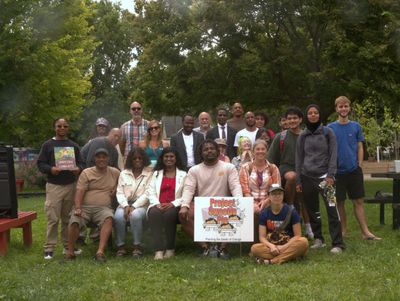
MCCA is now expanding its work from direct service programs toward the systemic infrastructure changes necessary for lasting equity. This shift reflects a fundamental conviction: that communities of color do not suffer from a lack of individual effort or cultural capacity. They suffer from systems healthcare, food, housing, education, economic that were not designed with them in mind and that continue to produce inequitable outcomes despite individual community resilience.
Our Commitment
Over more than a decade, the Multi-Cultural Community Alliance has demonstrated that a coalition rooted in cultural respect, driven by rigorous community partnerships, and guided by the Bicultural Healthy Living Framework can do what no single organization and no mainstream institution can do alone: reach the most isolated residents, build genuine trust across communities of color, and deliver programming that honors the whole person their health, their culture, their family, and their future.
That is MCCA’s past. It is also, with growing urgency and ambition, MCCA’s future.
